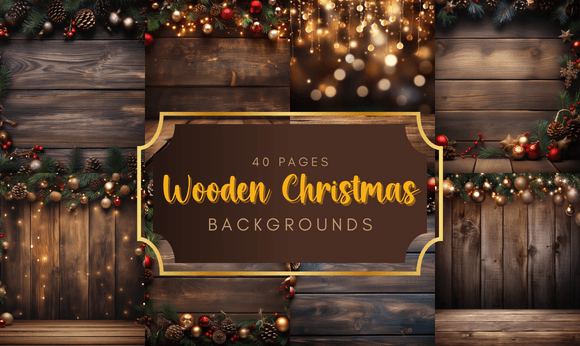
Warm Up Your Designs with Wooden Christmas Backgrounds
There is something undeniably nostalgic about the grain of natural wood, especially when mixed with the festive spirit of the holidays. If you are working on seasonal branding or holiday stationery, finding the right texture is half the battle. A high-quality wooden Christmas background serves as more than just a backdrop; it acts as a foundation for your entire visual story. I have worked with countless design assets over the years, and wood textures remain some of the most versatile because they bridge the gap between rustic charm and modern sophistication. They provide warmth without being overwhelming, which is exactly what you need when you are designing invitations, scrapbooks, or digital wallpapers for the holiday season.
The Aesthetic Appeal of Wood Textures
When we talk about visual characteristics, wood offers a unique complexity that synthetic textures often lack. The grain patterns, the subtle imperfections, and the natural color variations create a sense of authenticity. In the context of Christmas, this usually translates to rich mahogany, weathered barn wood, or light birch tones that evoke a cozy cabin atmosphere. This style has a distinct personality; it feels grounded, traditional, and welcoming. Whether you are a crafter working on physical goods or a digital marketer creating social media graphics, the texture adds an immediate layer of tactile quality. It makes flat designs feel like they have depth.
Applications in Modern Branding and Marketing
As a designer or entrepreneur, you know that consistency is key to building a brand identity. However, during the holidays, you also need to stand out. Wooden Christmas backgrounds are incredibly effective for this because they work across multiple channels. Imagine using these textures for your website hero images during a holiday sale. The wood grain creates a neutral but festive canvas that allows your typography to pop. This is particularly true if you are using a premium font or a display font for your headers. The rough texture of the wood contrasts beautifully with the clean lines of a sans serif font, or it can complement the elegance of a serif font if you are going for a vintage look.
For packaging design, these backgrounds are invaluable. If you sell physical products, wrapping paper, box inserts, or even the product label itself can benefit from a wood texture. It suggests durability and craftsmanship. Similarly, for editorial design, such as holiday magazines or blog headers, a wooden background provides a strong visual hierarchy. It grounds the content, making the page feel organized yet festive. You do not need to be a web design expert to implement this; simply layering a wood texture behind a text box with a slight transparency can transform a standard layout into something special.
Practical Guide to Using These Design Assets
Let’s get technical for a moment, because specifications matter when you are working on professional projects. The collection we are discussing offers 40 distinct wooden Christmas backgrounds at a resolution of 4000 x 4000 pixels and 300 DPI. Why does this matter? High resolution ensures that your designs remain crisp, whether you are viewing them on a retina display or printing them on large-format cards. The 300 DPI specification is the industry standard for print, meaning you can use these for high-quality flyers, posters, and invitations without worrying about pixelation. The PNG format is also crucial here, as it handles the subtle gradients and shadows of wood grain better than compressed formats like JPEG.
Pairing Typography with Wood
One of the most common mistakes I see in holiday design is poor font pairing against textured backgrounds. Wood is busy. It has lines, knots, and color shifts. If you place a script font or a highly detailed handwritten font directly on top of a complex grain, the text becomes unreadable. The solution is not to avoid the texture, but to manage the layering. Use a semi-transparent overlay—a box or a banner—to separate your text from the background. This allows you to use creative fonts for your headlines while maintaining readability.
For example, if you are designing a "Happy Holidays" card, you might use a bold modern typography style for the main greeting and a simpler sans serif font for the details. The wood background provides the mood, the overlay provides the contrast, and the fonts provide the message. This approach works for logo design as well; if your brand identity leans towards the organic or artisanal, a wood texture can be part of your seasonal logo lockup, provided the typeface is legible.
Commercial Use and Versatility
For those of you running a business, the commercial licensing of design assets is a critical consideration. When you purchase a digital product like this, you are investing in a tool that can be reused year after year. Because these are digital files, you have the flexibility to manipulate them. You can crop them, recolor them to match a specific brand palette, or combine them with other elements. They are perfect for social media graphics, where you need to create thumb-stopping content quickly. A wooden background instantly signals "holiday sale" or "seasonal update" to your audience, increasing engagement without requiring a complex photoshoot.
Think about the small business owner who needs to create a cohesive look across their packaging design, website, and Instagram feed. These backgrounds allow for that consistency. You can use the same texture as a background for your product photos, ensuring that the lighting and mood remain uniform. This level of professionalism builds trust with your audience. It shows that you pay attention to details, which translates to how they perceive your product quality.
Final Thoughts on Selection
When choosing from a set of 40 backgrounds, look for variety in tone. You want a mix of light, medium, and dark wood to accommodate different types of content. A dark walnut texture is great for elegant, formal invitations, while a light pine is better suited for playful, family-oriented designs. Test your chosen typeface against the background early in the design process. If the text struggles to stand out, switch to a bolder font weight or adjust the background opacity. Ultimately, the goal is to create a harmonious balance where the texture enhances the message rather than competing with it. These assets are designed to be workhorses for your creative toolkit, providing a professional foundation for all your holiday projects.