16 Vintage Brussels Postcard Backgrounds for Authentic Crafts
If you have ever wandered through the cobblestone streets of Brussels, you know there is a specific texture to the city—a blend of Art Nouveau grandeur and gritty, historic charm. Capturing that specific "Old World" aesthetic in a digital format is challenging, yet it is exactly what the 16 Vintage Brussels Postcard Backgrounds set achieves. For designers, scrapbookers, and content creators, this collection is not just a set of images; it is a toolkit for evoking nostalgia, elegance, and a sense of history. Whether you are working on a logo design for a boutique hotel, curating a junk journal, or designing packaging for an artisanal product, these backgrounds provide a foundational layer that modern photography often struggles to replicate.
The Aesthetic Power of Nostalgia in Modern Design
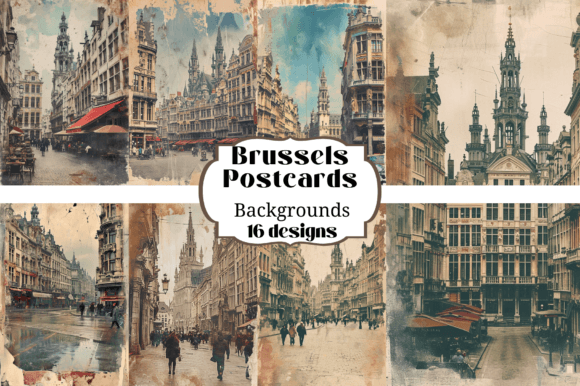
Why do we gravitate toward vintage textures? In an era of high-gloss, vector-perfect web design, there is a growing hunger for authenticity. The 16 Vintage Brussels Postcard Backgrounds offer a visual personality that is gritty, romantic, and deeply human. Visually, these files simulate the wear and tear of time—softened edges, sepia-toned paper textures, and the faint ghosting of ink that suggests a letter traveled a long distance to reach the viewer.
For the brand strategist, this style communicates trust and heritage. When applied to brand identity materials, a vintage texture signals that a brand values quality and timelessness over fleeting trends. This is particularly effective for entrepreneurs in the lifestyle, travel, or culinary sectors. Imagine a coffee roaster using one of these Brussels backgrounds as the canvas for their social media graphics; the texture instantly communicates "slow brew" and "craftsmanship" without a single word of copy.
However, the appeal isn't limited to commercial use. For the hobbyist and crafter, these images solve the problem of flat, lifeless digital papers. A standard digital scrapbooking paper often looks too clean. By using these vintage backgrounds, you introduce depth. The fibers of the "paper" catch the light, and the imperfections create a tactile illusion that makes a digital collage feel like a physical artifact.
Technical Specifications for Professional Results
As a designer or publisher, the usability of a file is just as important as its aesthetic. A common frustration with digital assets is resolution. Many stock sites offer images at 72 DPI, which falls apart the moment you try to print them. The 16 Vintage Brussels Postcard Backgrounds are delivered at 300 DPI. This distinction is critical. It means you can safely use these assets for editorial design, high-quality print projects, and large-format packaging without pixelation.
The delivery format is a zip file containing separate PNG files. PNG is the preferred format for creative work because it supports transparency and high color fidelity. Unlike JPEGs, which compress data and create artifacts (those fuzzy halos around text), PNGs maintain the crispness of the texture. This makes them ideal for layering. You can place these backgrounds behind typography or overlay them on other images using "Multiply" or "Overlay" blend modes in Photoshop to instantly age a modern photo.
Furthermore, the files are watermark-free. This is a practical necessity for content creators. Nothing disrupts a workflow faster than having to clone-stamp out a watermark to see if the asset actually fits the design. With this set, what you see is what you get—clean, usable art ready for immediate integration into your project.
Strategic Applications: From Junk Journals to Marketing
Understanding the technical specs is one thing; knowing how to deploy these assets effectively is another. The versatility of the 16 Vintage Brussels Postcard Backgrounds allows them to bridge the gap between digital and physical crafts.
For the Scrapbooker and Paper Crafter:
The primary use case is, of course, scrapbooking and junk journaling. These backgrounds serve as the "stage" for your memories. Because they feature distinct vintage typography and imagery, they are perfect for travel journals. If you are documenting a trip to Europe, or even a local city tour, placing your photos on top of a Brussels postcard background adds context and atmosphere. They also work beautifully for card making; a simple "Happy Birthday" text overlaid on one of these textures creates a sophisticated, bespoke greeting card that looks expensive and thoughtful.
For the Digital Marketer and Blogger:
In the digital space, texture adds stopping power. A blogger can use these backgrounds as the header image for a post about history, culture, or food. Because the files are resizable, you can crop into the details. Perhaps you only want the top left corner of a postcard to use as a sidebar graphic. The high resolution allows for this cropping without loss of quality. For marketing emails, using a subtle vintage texture behind the main text block can break the monotony of a standard HTML email, making the newsletter feel more like a personal letter.
For the Branding Expert:
When developing a brand identity, consistency is key. These assets can be used to create a cohesive "world" for a brand. For example, a vintage-themed restaurant could use these backgrounds for their menu design, their table numbers, and their Instagram stories. This repetition of texture creates a subconscious association in the customer's mind. It turns a simple graphic into a recognizable piece of the brand's visual language.
Integrating Vintage Assets into Modern Typography
One of the most common mistakes in using vintage assets is pairing them with the wrong typeface. If you place a hyper-modern, geometric sans serif font over a distressed vintage postcard, the contrast can be jarring (and not in a good way).
To get the most out of the 16 Vintage Brussels Postcard Backgrounds, consider your typography choices carefully.
- The Contrast Approach: Use a clean, bold serif font or a structured sans serif font. The clean lines of the text will stand out against the messy, organic texture of the background. This is excellent for readability and visual hierarchy, ensuring your message isn't lost in the art.
- The Harmonious Approach: Pair the backgrounds with a script font or a handwritten font. This mimics the look of a personal letter or a diary entry. This combination works best for personal projects, wedding invitations, or brands that want to emphasize a human touch.
When testing your font pairings, pay attention to the "busyness" of the background. Some of the Brussels postcards might have intricate illustrations of architecture. If the background is busy, your text needs to be bold and simple. If the background is a simple, faded paper texture, you can afford to use a more delicate, decorative font.
Practical Tips for Evaluation and Usage
Before finalizing a project using these assets, it is worth taking a moment to evaluate the fit. Here is a quick checklist for designers and creators:
- Check the Lighting: Vintage images often have their own "light source" based on the shadows in the printing. Try to match the lighting direction of your overlay elements (like photos or text shadows) to the lighting in the postcard background.
- Color Grading: While the backgrounds are vintage, they might have specific color casts (yellows, browns, or faded blues). Use your software's color adjustment tools to ensure your foreground elements don't look too vibrant or "digital" against the muted background.
- Commercial Licensing: For small business owners and entrepreneurs, always double-check the usage rights. These files are typically licensed for commercial use in end products (like a printed poster or a digital template sold to a client), but you usually cannot resell the raw files themselves. Understanding this distinction protects your business.
The 16 Vintage Brussels Postcard Backgrounds are more than just decorative filler; they are premium design assets. They offer a bridge between the tactile pleasure of paper and the efficiency of digital production. Whether you are printing them out for a collage or layering them in a web design mockup, they bring a level of sophistication and storytelling that generic backgrounds simply cannot match. By utilizing these files, you are not just decorating a page; you are inviting your audience to step back in time and experience a moment of history.