Visualizing the Beat: Musical Joyful Rhythms Backgrounds
As a designer, you know that a blank canvas is both a promise and a challenge. You have the message, the copy, the core idea, but you need the visual spark that makes people stop scrolling and start feeling. This is where visual assets like Musical Joyful Rhythms Backgrounds come into play. They aren't just decorative filler; they are a foundational layer of mood and energy. Think of them as the bassline to your visual composition, setting a tone of vibrant, creative celebration before a single word of your headline is even read.
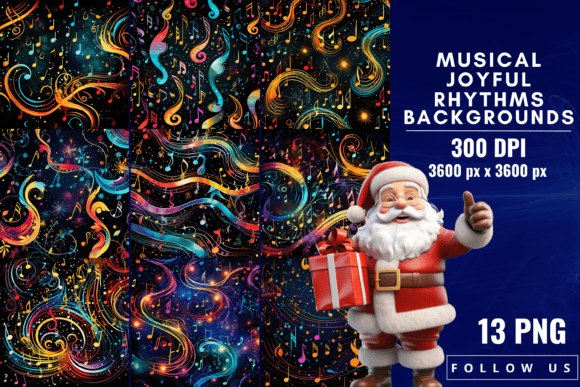
This collection of 13 HD images is a masterclass in translating an auditory experience—music—into a visual one. The personality is unmistakably upbeat and creative. You won't find static, sterile patterns here. Instead, each background is alive with dynamic, flowing lines that mimic the movement of sound waves or the graceful arc of a conductor's baton. The color palette is intentionally vibrant, pulling from a spectrum of energetic hues that feel like a visual representation of a major chord—bright, resonant, and full of life. The style blends abstract art with clear musical motifs. You might see stylized musical notes woven into a swirl of color, or the silhouette of a guitar neck forming the spine of a geometric pattern. This isn't literal illustration; it's artistic interpretation, giving you the essence of music without locking your design into a specific genre or era.
Where Rhythm Meets Design: Practical Applications
The true value of any design asset is measured by its versatility. Musical Joyful Rhythms Backgrounds excel in scenarios where you need to inject immediate energy and a creative spark. For anyone in the events space, these are a natural fit. Imagine designing a social media announcement for a local jazz festival or a poster for a school talent show. These backgrounds provide a professional, thematic base that instantly communicates the event's nature, saving you hours of searching for or creating something from scratch.
Beyond events, their application in branding and marketing is surprisingly broad. A small business selling handmade instruments, a music teacher building their website, or a podcast about creative living could use a subtle, zoomed-in crop of one of these patterns as a website header or a recurring background element. This creates immediate brand recognition and infuses the brand identity with a sense of artistry and joy. For content creators and bloggers, they are a secret weapon. Use them as the backdrop for a quote graphic about inspiration, a thumbnail for a video on creative processes, or a unique background for product photography if you sell items like art supplies or planners. The key is that they provide a premium font of visual energy, elevating even the simplest layout.
Integrating Rhythmic Visuals into Your Workflow
So, how do you actually work with a set of backgrounds like this? It starts with evaluating the project's needs. Is the goal to be loud and attention-grabbing, or to add a subtle layer of sophistication? A full, colorful background might overwhelm a text-heavy report, but it could be perfect for a bold event poster. For more nuanced projects, consider using the backgrounds at a reduced opacity or as a display font element in a banner, allowing your primary sans serif font for body copy to remain highly readable.
Font pairing is critical here. The energetic, often abstract nature of these backgrounds pairs best with clean, modern typography. A strong, geometric sans serif font for headlines will provide excellent contrast and keep the design grounded. If you're aiming for a more elegant or traditional feel, a classic serif font can create a beautiful tension between the modern background and timeless typography. Avoid overly ornate script font or handwritten font choices for main text, as they can clash with the visual complexity and harm readability. Instead, reserve such creative fonts for very short, impactful callouts.
Finally, always test. Place your text over a potential background and ask: Is it readable at a glance? Does the background support the message or compete with it? These backgrounds are a powerful tool in your design assets library, but like any tool, their effectiveness depends on the skill of the craftsperson. Used thoughtfully, they can transform a standard social media graphic into a scroll-stopping piece of art, or turn a basic presentation slide into an engaging visual story. They are a celebration of the universal language of music, translated into a visual dialect you can use to connect with your audience on a deeper, more emotional level.