Unleash Raw Creativity with Junky Backgrounds Digital Papers
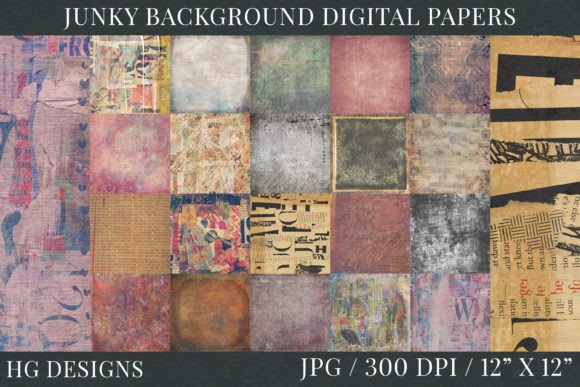
In a digital world often dominated by pristine vector graphics and sterile gradients, there is a powerful counter-movement brewing in the design community. It’s a return to the tactile, the imperfect, and the deeply human. At the forefront of this aesthetic shift are Junky Backgrounds Digital Papers, a resource that doesn't just offer a backdrop, but a foundation for authentic storytelling. This isn't your average collection of stock textures; it's a curated set of vintage-styled digital papers designed to inject soul, history, and a compelling narrative into any creative project.
More Than Just a Texture: The Anatomy of the "Junky" Aesthetic
So, what exactly defines the character of these digital papers? The term "junky" is a deliberate and evocative choice. It points to a style that embraces the beauty of decay, the charm of the well-worn, and the patina of time. Imagine the layered, paint-chipped surface of an old workshop door, the stained and creased endpapers of a century-old book, or the sun-faded, ink-spattered canvas of a forgotten artist's studio. Each design within the Junky Backgrounds Digital Papers collection captures this essence. The visual personality is one of authentic grit and subtle complexity. You won't find flat, uniform colors here. Instead, you'll discover rich layers of texture, distressed marks, and nuanced color shifts that create a sense of depth and history. This style provides an immediate sense of place and mood, making it a powerful tool for designers looking to move beyond the generic.
Where Grit Meets Craft: Practical Applications
The true strength of a versatile design asset lies in its adaptability. The high-resolution specifications of the Junky Backgrounds Digital Papers—JPG format at 300dpi, sized at a generous 3600 x 3600 pixels—make them suitable for a vast range of applications, from small digital icons to large-format prints. This is where theory meets practice.
Digital Design and Brand Identity
For entrepreneurs and small business owners, establishing a memorable brand identity is paramount. If your brand story involves craftsmanship, heritage, bohemianism, or an artisanal quality, these backgrounds are a perfect fit. Use them as the foundation for a logo design on a rustic coffee bag, as a textured background for a web design header to create an immersive user experience, or as a consistent element in your social media graphics to build a cohesive and recognizable feed. They provide a sophisticated alternative to a simple color block, adding a layer of visual interest that speaks volumes about your brand's personality. In editorial design, they can transform a flat digital magazine layout into a tactile-feeling experience, perfect for articles on vintage style, DIY projects, or historical topics.
Print, Craft, and Tangible Creation
The utility of these papers extends far beyond the screen. For scrapbookers and junk journalers, they are an indispensable resource, providing an instant, authentic-looking foundation for pages without the mess of physical inks and paints. Their quality makes them excellent for sublimation projects, allowing you to transfer these rich textures onto mugs, t-shirts, and coasters with stunning clarity. Imagine creating a line of unique, printable wall art or designing one-of-a-kind packaging design for a handmade product. The possibilities are endless, from creating custom decoupage papers for furniture restoration to designing textured backgrounds for jewelry photography. The "junky" aesthetic adds a layer of perceived value and uniqueness to any craft, making the final product feel more intentional and curated.
Integrating Imperfection: A Guide for Designers
Working with a strong textured background requires a thoughtful approach. It's not just about placing it behind your content; it's about integrating it into your overall design language. Here are some practical considerations for making the most of a creative font and textured background pairing.
- Font Pairing and Readability: A busy, textured background demands careful font pairing. To ensure readability, pair these papers with clean, bold typefaces. A simple sans serif font for body copy often works best, providing a clear, legible counterpoint to the complex background. For headlines, you can be more adventurous. A strong serif font can enhance the vintage feel, while a clean script font or handwritten font can add a personal, human touch. The key is contrast in style and weight. Always test your text over different sections of the background to ensure it remains clear and accessible.
- Creating Visual Hierarchy: Use the texture to guide the viewer's eye. You can place your main call-to-action or a key piece of information over a slightly less "busy" area of the paper. Alternatively, use semi-transparent shapes or overlays to create a clean zone for text, allowing the texture to frame the content without competing with it.
- Project Fit and Brand Perception: Before committing, evaluate if the "junky" aesthetic aligns with your project's goals. It’s a fantastic choice for brands that want to convey authenticity, history, or a handcrafted feel. It might be less suitable for a brand that needs to project a sleek, futuristic, or minimalist image. The texture directly influences brand perception, so choose intentionally.
- Commercial Use and Consistency: A major benefit of a digital paper pack is the potential for creating a consistent brand identity across multiple platforms. Using variations from the same collection ensures your print materials, website, and social media all share a cohesive visual language. Always review the license to understand the terms for commercial font and asset usage, ensuring your projects are compliant.
Ultimately, resources like the Junky Backgrounds Digital Papers are more than just design assets